
The Hidden Costs of Ad Rejections: A Risk Framework for Modern Growth Teams
Ad rejections cost more than lost spend. Use a practical risk framework by channel, vertical, and claim type to prevent delays, CPM inflation, and trust hits.
1) Rejections Aren’t a Line Item—They’re a Compound Risk
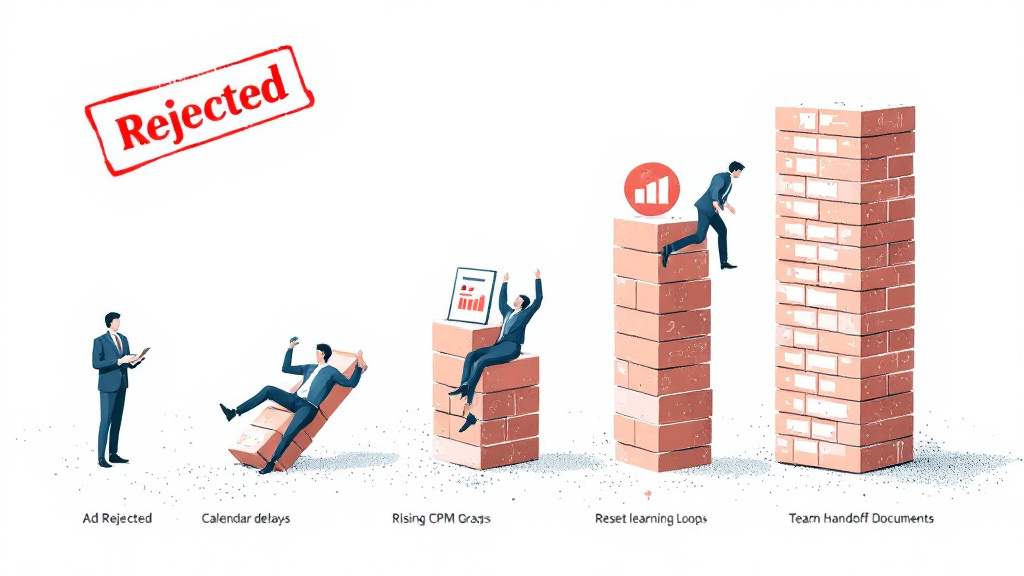
Most teams treat an ad rejection as a one-off inconvenience: fix the creative, resubmit, move on. In reality, it’s a compounding risk-management problem that touches performance-marketing, creative-ops, and growth-ops at once. Beyond the obvious lost impressions, rejections create launch delays (missed promos, seasonality windows), fragmented handoffs (legal vs. media vs. design), and hidden labor costs as teams scramble to interpret ad-policy language under time pressure.
The downstream effects are often worse than the initial stop. Each iteration can reset learning in channel models, interrupt budget pacing, and force spend into less efficient audiences when the original targeting window has moved. Even “limited” approvals can quietly reduce delivery, inflate CPMs, and skew testing results—making winners look like losers and pushing teams to ship safer, blander creative. If you’re scaling, the real cost is predictability: rejections turn campaign planning into reactive operations, with account trust and velocity as the long-term casualties.
2) The Hidden Costs: Learning Reset, CPM Inflation, and Account Trust Signals

When an ad gets rejected mid-flight—or stuck in review—the immediate loss is time, but the measurable damage shows up in platform dynamics. First, experimentation suffers: A/B tests lose continuity, learning phases restart, and your measurement narrative fractures. The result is slower optimization cycles and noisier conclusions, especially for high-velocity performance-marketing teams running frequent creative refreshes.
Second, delivery economics shift. Delays compress your spend into narrower windows, often bidding against peak competition, which can drive CPM inflation and reduce conversion volume. Limited delivery (e.g., restricted categories, missing disclosures, or sensitive claim flags) can also route traffic through less favorable placements, changing audience mix and increasing CPA variability.
Third—and easiest to ignore—are account trust signals. Repeat ad-policy violations, inconsistent disclosures, or “edge” claims can elevate scrutiny and lengthen review times across future submissions. For creative-ops and growth-ops, this becomes operational drag: more approvals, more escalations, and less confidence in launch timelines. In regulated verticals, the same issue can be amplified by claim support requirements and synthetic media disclosure rules.
3) A Practical Risk Framework: Quantify by Channel, Vertical, and Claim Type
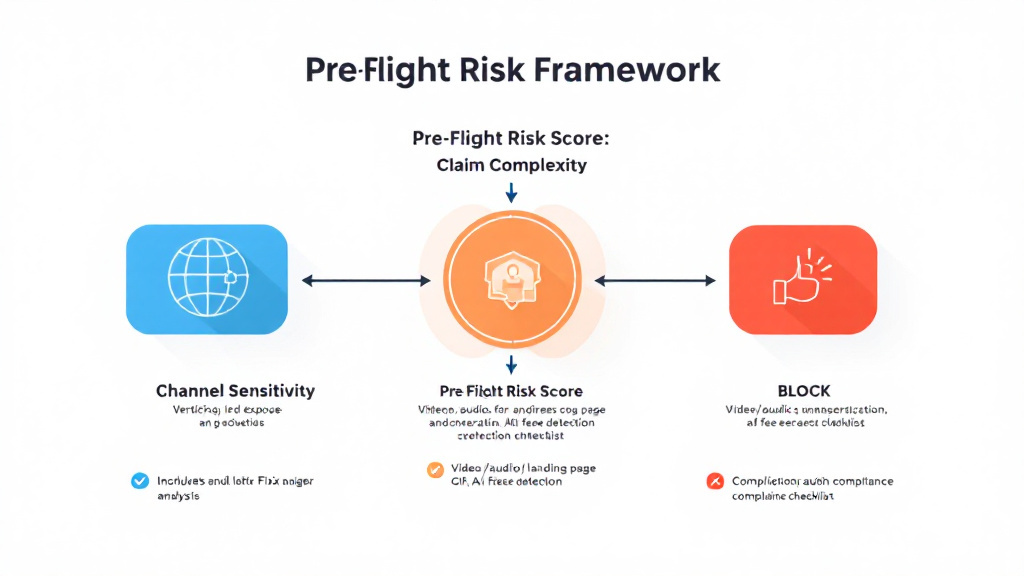
To prioritize prevention over remediation, treat rejections like an assessable risk portfolio. Start with a simple scorecard across three dimensions: Channel sensitivity (review strictness and enforcement speed by Meta/TikTok/Google), Vertical exposure (e.g., health, finance, politics, minors, housing), and Claim type complexity (performance claims, comparative claims, before/after, guarantees, earnings, or health outcomes). Weight each dimension by your business reality: launch criticality, spend velocity, and historical rejection rate.
Next, assign each ad a Pre-Flight Risk Score: likelihood of rejection × impact of delay. Likelihood rises with unsupported claims, missing disclosures, or synthetic/manipulated media ambiguity; impact rises with tight calendars, high-budget bursts, and dependence on stable learning. Translate the score into an operational verdict—SHIP / FIX / BLOCK—with prioritized edits and evidence requirements.
This is where consolidated tooling matters. A multimodal system like the AdPublishability Engine can evaluate creatives and landing pages together—extract claims via OCR/transcription, map them to ad-policy rules, detect synthetic media disclosure needs, and return one actionable recommendation. For risk-management and creative-ops, that unified verdict is the difference between predictable launches and expensive surprises.